|
Chateau Bizard
(Grignan-les-Adhémar) since 2009
Romain Roche (Cairanne) since
2009
Domaine Rouvre St Leger
(Laudun) since 2008
Domaine Galuval (Cairanne) since 2009
avec Thomas Oui
Domaine Longue Toque
(Gigondas)
Domaine des Florets
(Gigondas) since 2010
Chateau Juvenal (Ventoux) since
2011
Domaine Maby (Lirac/Tavel) since
2011
Mas
des Volques
(Duché d'Uzès)
Domaine Clos du Palay (Seguret) since 2015
Producer in Languedoc
Chateau Puech
Haut since 2009
Producer in Macedonia
Tikves Winery
AD Skopje since 2009
Together with Michel Tardieu
Philippe Cambie is advisor for
Michel et Bastien Tardieu Lourmarin since
2000
Bodega
Mas Alta, Priorat, Spain since 2004
Chateau
Paradis, Coteaux Aix en Provence since 2005
Chateau Castigno, Saint-Chinien, Languedoc-Roussillon since
2006.
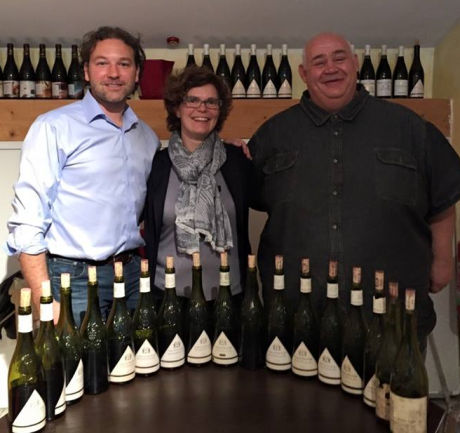
When
Jeb Dunnock visits a
client Philippe Cambie must
of course be
present. Here
during a visit at
Chateau de la Font du Loup.
The lady is the owner Anne
Charlotte Melia Bachas. A
vertical tasting with quite
some vintages.
Philippe is regarded by clients
as something close to a beloved family
member.
It's no secret - if you follow
Philippe on facebook -
that he is very fond of good
food. Therefore he can also
count chefs in the area for
good friends who usually do their
best to
serve perfect and large
portions when Philippe is
visiting. They get good advertisement
from his
beautifull
pictures on social medias Domaine de Calendal
In 2004 Philippe Cambie purchased a parcel of 1,5
ha. at Plan de Dieu with old and good vines. The yield from here is from
vintage 2006 vinified at Domaine des Escaravailles in Roaix by Cambie's
friend from the years at the wine university in Montpellier, Gilles
Ferrand. Since harvest 2008 Cambie has also been in possession of a neighbouring parcel of 3 ha. also with old vines.
Probably no one will dispute that Domaine de Calendal is without
competion is the best wine from the appellation Cotes du Rhone
Village Plan de Dieu
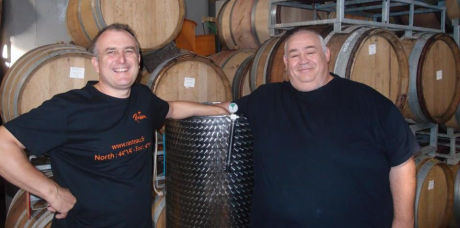
Gilles Ferrand and Philippe Cambie
Vinergie
Philippe Cambie was advisor for Philippe du Roy de
Blicquy, who in 1990 purchaced Domaine de Villeneuve, and in a couple of
years he managed to make eccoing wines from the disrepaired vineyards at
the small domain. Furthermore he established a negociant business, Les Grandes Vignes du Roy
to market his own and his partners wines labelled with
the name of the suppliers or eventually by the name
Les Grandes Vignes du Roy.
This business is today managed by the agent
firm Vinergie.
Philippe Cambie is a part of this firm which sell wines from domains,
using Cambie as oenological advisor: Domaine de Villeneuve,
Domaine Patrice Magni, Domaine des Esvaravailles
and Domaine Grand Nicolet.
Les Halos de Jupiter
A
negociant project in partnership with Michel Gassier
from Chateau de Nages has been established. The wines are made
in the cellars of the producers.
They are marketed by Michel Gassier - only outside France.
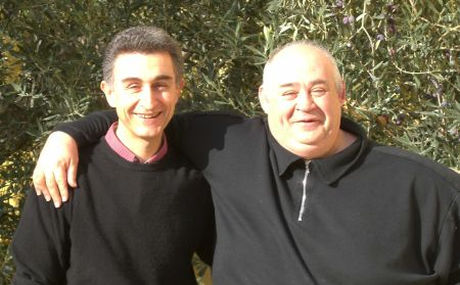
Michel Gassier and
Philippe Cambie
Tenet
Wines
This
project is a collaboration between Chateau
Ste. Michelle in Washington State US, represented by
this domain's chef winemaker Bob Bertheau,
and Michel Gassier /
Philippe Cambie from Rhone.
The project aims to identify the best
methods of cultivation, terroirs and
vinefication methods for the grape Syrah
in Washington. Not to
make a Syrah wine similiar to a wine from Rhone
but in order to develop the best possible Syrah
wine in Washington State.
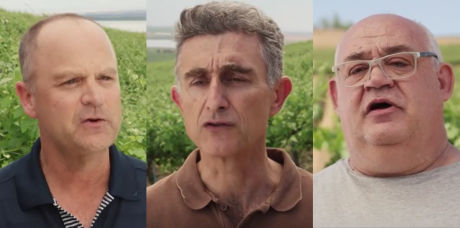
Bob Bertheau, Chateau Ste. Michelle, Michel Gassier and Philippe Cambie.
Photos from a video
telling about their project
GFV
Les Fils d'Alcmene
This company (Groupement
Foncier Viticole) was created in 2013
together with another of Philippe
Cambie's good friends, Jean-Marie
Royer, Domaine Jean Royer.
It is a company where anyone can contribute
with one or more shares of € 3,000.
The means will be used to hire vineyards
of Chateauneuf du Pape for
periods of 18 years. (Normal
rental period in Rhone). The
profit is an annual box of good wine
made from grapes from the
rented vineyards
Alcmene was the mother of the Greek
God Herakles.
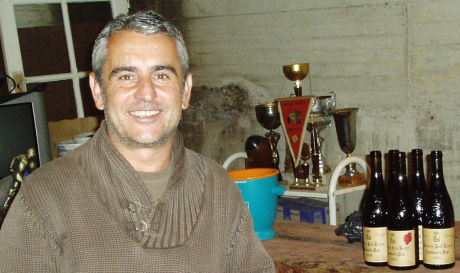
Jean-Marie Royer. His
(rented) cellar is situated near the rugby-stadion in Chateauneuf du
Pape. Note the prize cups. Royer's cellar has been used as a
clubhouse where players after a fight could evaluate the match and
enjoy a glass of wine or maybe even a beer? Oh yes, we all looked
younger in 2008.
|