| Domaine
de la Charité Sandrine and Christophe Coste 5, Chemin Issarts 30650 Saze Tel. +33 607 608 341 Direct sale: Yes Mail: Via website Web http://rhoneorganicwines.com/index.php 


"Our first land and our first estate - Domaine de La Charité - owes its particular name, according to the land register, to the lord of Saze who, in the Middle Ages, entrusted this plot of land to the clergy of the village to grow vines. and thus produce a mass wine - the wine of Charity. The history of our cellar, and its five hectares that we had at the beginning, goes back three generations until 1964, when we decided to detach ourselves from the Rochefort-du-Gard wine cooperative in order to become an independent producer and work only within the family framework. In 1991, we acquired a second domain of 13 hectares - Domaine de Javone - which was at that time the property of Baron Baroncelli Javon, the banker of the Popes of Avignon. We have dedicated this area to the export market with different varieties of grape varieties."
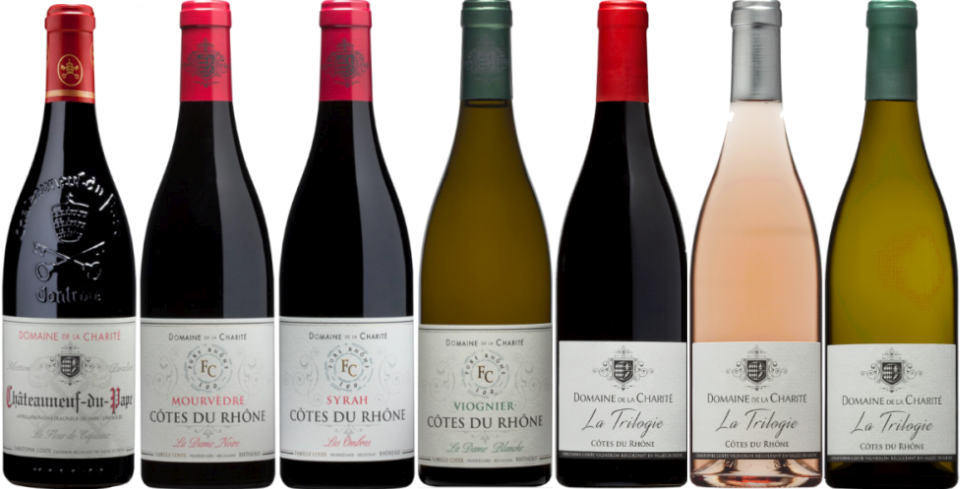
- Quote from website Wines according to website December 2020 Chateauneuf du Pape La Fleur de Capucine Cotes du Rhone Village Signargues
Altitude 150 Cotes du Rhone La Trilogie Cotes du Rhone Les Ombres Cotes du Rhone La Dame Noir Cotes du Rhone Rosé La Triologie Cotes du Rhone Blanc La Triologie Domaine de Javone Cotes du Rhone La Première Pente Domaine de Javone Cotes du Rhone Rosé La Première Pente Domaine de JavoneCotes du Rhone Blanc La Première Pente
|
|